
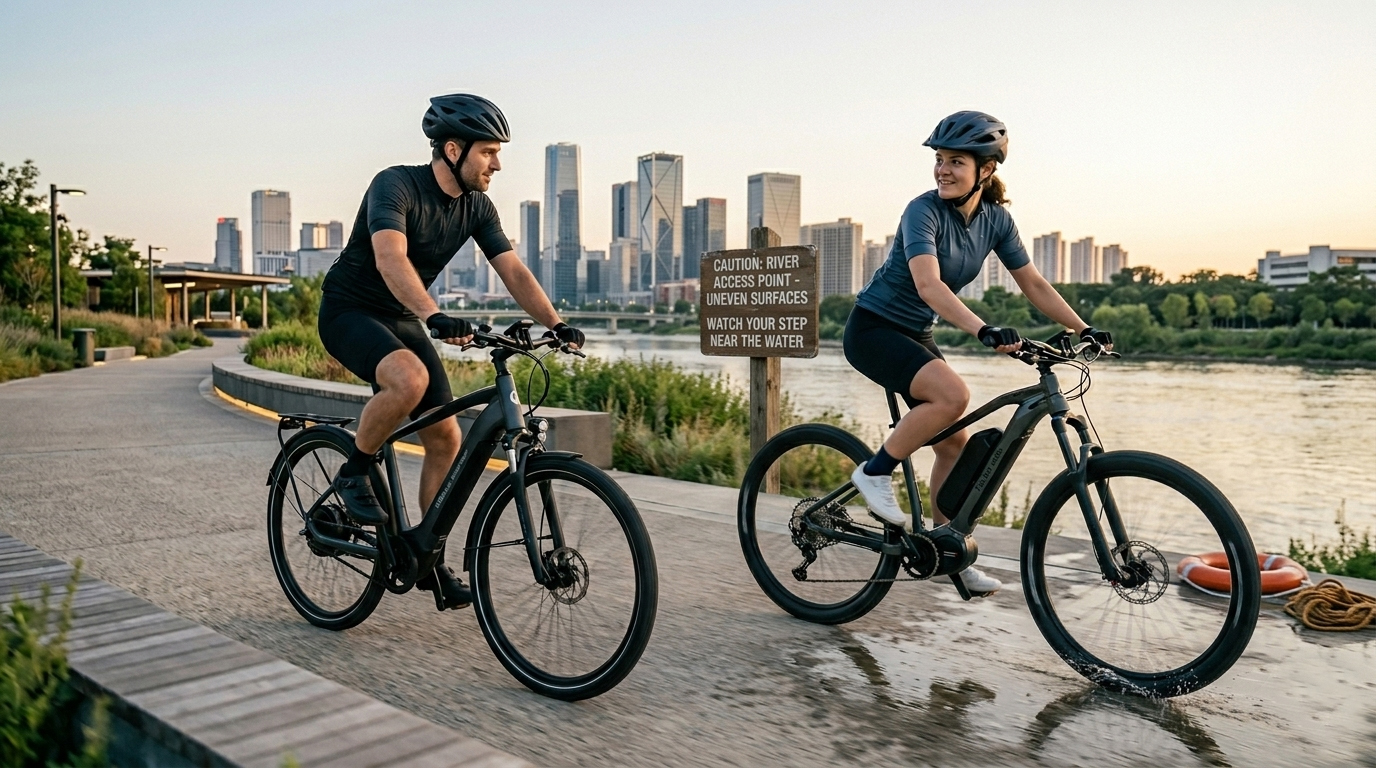
Intro: In 2026, buying an ebike is no longer just about picking a frame; it’s about choosing a lifestyle partner. As seen in the contrast between the two riders in our featured image (p3.png), the market has split into highly specialized categories. Whether you are navigating the polished concrete of a downtown “Urban Road” or the unpredictable silt of a “River Access Point,” your bike’s geometry, motor, and tires will determine your success.
1. The Urban Commuter: The “Daily Driver” for the Concrete Jungle
The rider on the left in p3.png represents the pinnacle of urban efficiency. This category is for those whose primary “trail” is the morning commute.
- Integrated Urban Ecosystem: A true 2026 commuter bike isn’t just a bike; it’s a vehicle. It features integrated rack systems (often MIK or Snap-it 2.0 compatible) that allow you to swap a child seat for a grocery basket in seconds.
- The Maintenance-Free Dream: For city riders, we recommend looking for Internal Gear Hubs (IGH) paired with a Carbon Belt Drive. Unlike the chain seen on the right, a belt drive requires zero grease and can last over 10,000 miles without maintenance.
- Safety as a Standard: Look for bikes with 360-degree visibility. Integrated lights in 2026 are no longer just “to see,” but “to be seen,” often featuring high-lumen daytime running lights (DRL) and even brake-light functionality.
2. The All-Road Explorer: Bridging the Gap Between Street and Trail
The rider on the right in p3.png is on a “Crossover” or “All-Road” ebike. This is the fastest-growing segment in 2026 because it refuses to be pigeonholed.
- Suspension Physics: Note the front suspension fork in p3.png. For riders who encounter “Uneven Surfaces,” a fork with 60mm to 100mm of travel is the sweet spot. It provides comfort on gravel without adding the excessive weight of a full-downhill mountain bike.
- The Mid-Drive Mandate: If your path involves riverbanks or loose dirt, a mid-drive motor (located at the pedals) is non-negotiable. By driving the chain rather than the wheel, it allows you to use the bike’s gears as a “low-range” transmission for climbing out of sandy river access points.
- Tire Geometry: These bikes typically sport “Balloon” tires (2.2″ – 2.4″ width). They offer a larger air volume that acts as secondary suspension, providing grip on wet riverside paths where a skinny road tire would slip.
3. Decoding the “Caution” Sign: Technical Considerations for Heavy Ebikes
The sign in p3.png warns of “Uneven Surfaces” and “Water Proximity.” For ebike owners, these warnings carry extra weight—literally.
- The Momentum Factor: An ebike typically weighs 22kg to 30kg. When riding near water or on uneven ground, your braking distance is significantly longer than a traditional bike. Always opt for 4-piston hydraulic disc brakes if you plan on carrying cargo or riding in hilly areas.
- Center of Gravity: The bikes in the image show low-slung motor and battery positions. A low center of gravity is what makes these bikes feel stable even when the ground gets “uneven.” Avoid bikes with heavy racks-mounted batteries, as they make the bike “tail-heavy” and harder to control in turns.
4. 2026 Lifestyle Checklist: Which One Are You?
| Feature | The City Commuter (Left) | The All-Road Explorer (Right) |
| Primary Terrain | Asphalt, Bike Lanes, Pavement | Gravel, Dirt Paths, Riverfronts |
| Ideal Motor | Silent Rear Hub or Mid-Drive | High-Torque Mid-Drive (85Nm+) |
| Tire Type | Slick/Semi-Slick (700c x 38-45) | Knobby/Hybrid (27.5″ x 2.2″+) |
| Must-Have Accessory | Integrated Rear Rack & Fenders | Front Suspension & Dropper Post |
| Vibe | Efficient, Professional, Clean | Adventurous, Rugged, Versatile |
Conclusion: Don’t Just Buy a Bike, Buy a Solution
The magic of the scene in p3.png is that both riders are enjoying the same sunset, despite having very different machines. Your choice should be based on the “80/20 Rule”: Buy the bike that excels at the 80% of riding you actually do, not the 20% you think you might do someday.