
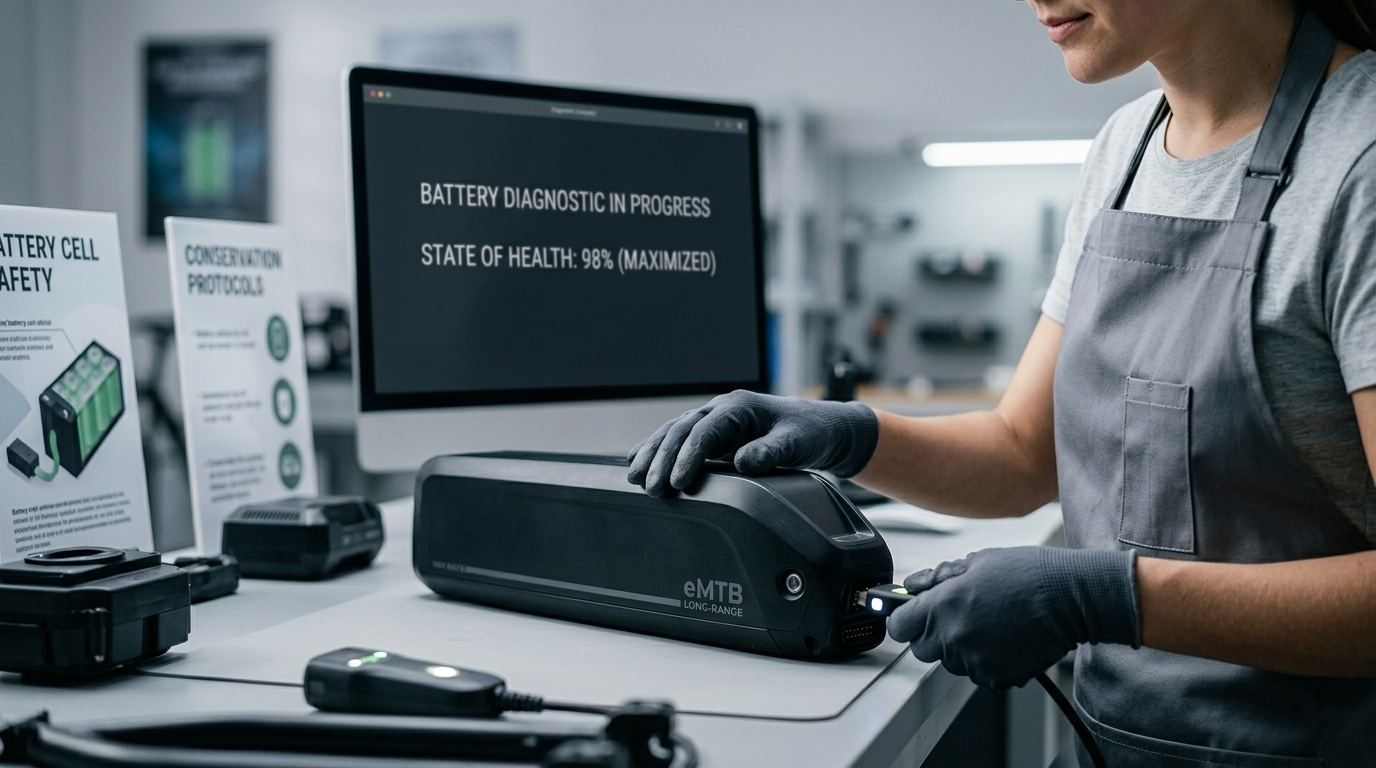
Intro: In 2026, an ebike battery is no longer a “black box” of mystery. With advanced diagnostics and next-generation cell chemistry, riders now have unprecedented control over their bike’s lifespan and performance. Understanding the tech inside that casing is the key to unlocking true cycling freedom.
1. State of Health (SoH): The New Metric That Matters
As seen in modern diagnostic labs, we have moved beyond simply looking at “bars of charge.” The industry standard in 2026 is State of Health (SoH) monitoring.
- Real-Time Diagnostics: Professional diagnostic tools now interface directly with the battery’s BMS (Battery Management System) to provide a percentage-based health score. An SoH of 98% indicates a battery that has been perfectly maintained through optimal charging cycles.
- Predictive Maintenance: These diagnostics can identify a single failing cell among dozens before it affects your ride, allowing for modular repairs rather than total battery replacement.
2. High-Performance eMTB Cells: Built for Torque
The battery in the image is specifically labeled for eMTB (Electric Mountain Bike) use. These batteries are engineered differently than city-bike batteries.
- High Discharge Rates: Off-road riding requires sudden bursts of power for steep climbs. eMTB batteries in 2026 utilize Silicon-Graphite anodes, which allow for higher current draw without overheating the internal components.
- Shock Resistance: Internal “Conservation Protocols” and reinforced cell-spacing ensure that the battery can withstand the constant vibrations and heavy impacts of technical trail riding.
3. The Shift to Solid-State and Semi-Solid Chemistries
While Lithium-Ion remains popular, 2026 marks the mass adoption of Semi-Solid State batteries in premium eMTB models.
- Energy Density: These batteries offer a 30% increase in Wh/kg, meaning a “Long-Range” battery that used to weigh 4kg now weighs less than 3kg, significantly improving the bike’s handling.
- Enhanced Safety: By reducing the amount of liquid electrolyte, these batteries are far more stable under extreme pressure or in the event of a casing puncture—a critical safety feature for aggressive mountain biking.
4. Conservation Protocols: Maximizing Lifespan
To maintain that “98% SoH” seen on the screen, 2026 ebikes utilize automated software protocols.
- Auto-Storage Mode: If the battery detects it hasn’t been used in 10 days, it automatically discharges itself to the ideal 50% storage voltage to prevent chemical degradation.
- Temperature Throttling: During charging, the BMS will slow down the input current if internal temperatures exceed 45°C, ensuring the cells never suffer permanent heat damage.