
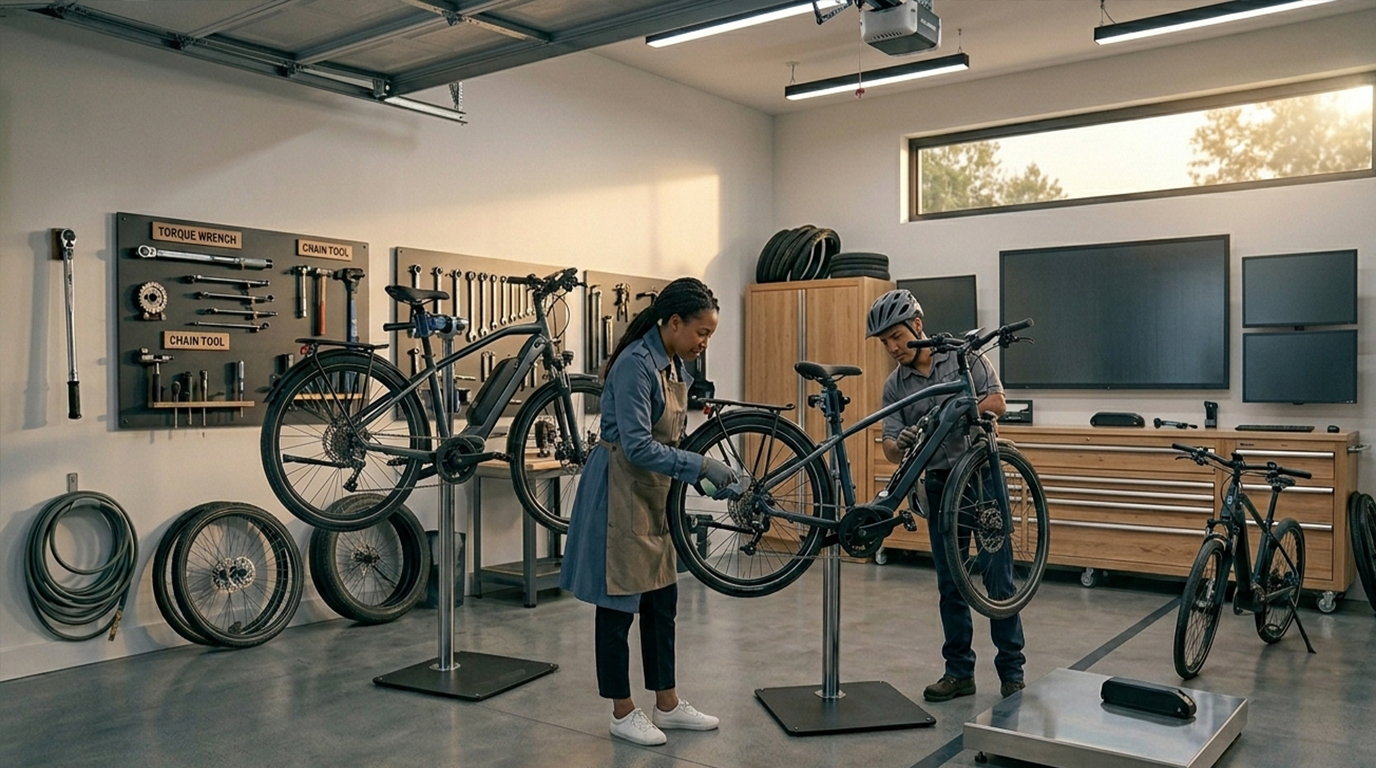
Intro: To keep your ebike performing like it did on day one, a simple rag and some oil aren’t enough anymore. In 2026, the complexity of integrated motors and electronic shifting requires a dedicated maintenance space and the right technical tools. Let’s take a look at the essential components of a professional-grade home workshop.
1. The Foundation: A Professional Repair Stand
As seen in p6.png, a sturdy, floor-mounted or heavy-duty mobile Repair Stand is the first thing you need.
- Safety First: Ebikes are significantly heavier than traditional bikes. A stand capable of holding 30kg+ safely is essential for working on the drivetrain or cleaning the underside of the frame.
- Ergonomics: Lifting the bike to eye level prevents back strain and allows you to inspect the motor housing and battery connections with precision.
2. The Must-Have Tool: The Torque Wrench
Prominently displayed on the tool board in p6.png is the Torque Wrench. This is arguably the most important tool for any 2026 ebike owner.
- Precision Fastening: With lightweight alloys and carbon fiber components, over-tightening a bolt can lead to catastrophic frame failure.
- Critical Specs: Always check the “Nm” (Newton Meters) markings on your stem, seat post, and motor bolts to ensure every fastener is tightened to exact manufacturer specifications.
3. Drivetrain Specialist Tools
The tool wall in p6.png also highlights Chain Tools and specialized wrenches.
- Chain Wear Indicator: Ebike motors put immense stress on the chain. Checking for “chain stretch” monthly can save you hundreds of dollars by preventing premature wear on your expensive cassette and chainrings.
- Cleaning Stations: Notice the technician using a specialized cleaning spray. Using ebike-specific, non-conductive degreasers ensures you don’t damage the sensitive electronic sensors near the mid-drive motor.
4. Advanced Battery & Electronics Care
In the foreground of p6.png, we see a battery removed and placed on a specialized Diagnostic Scale/Platform.
- Battery Contact Cleaning: Use electronic contact cleaner to keep the battery ports free of dust and corrosion, ensuring a seamless flow of power and data between the battery and the motor.
- Software Updates: While not a physical tool on the wall, a laptop or tablet is now a garage essential for running firmware updates via your bike’s IoT connectivity hub.
5. Organizing Your Workspace for Success
The key to the workspace in p6.png is Organization.
- Tool Boards: Hanging tools like wrenches and pliers on a pegboard not only looks professional but prevents you from losing small, specialized bits.
- Safety Equipment: Always keep a fire extinguisher (specifically rated for lithium-ion if possible) and a first aid kit in your workshop area, as seen on the far right of the image.