
Intro: As ebikes become a primary mode of international and urban transport, staying compliant with local laws is more critical than ever. Whether you are crossing borders or just commuting through your home city, 2026 marks a year of standardized safety inspections and stricter regulatory enforcement to ensure harmony between micro-mobility and traditional traffic.
1. Understanding the Class System: USA vs. EU
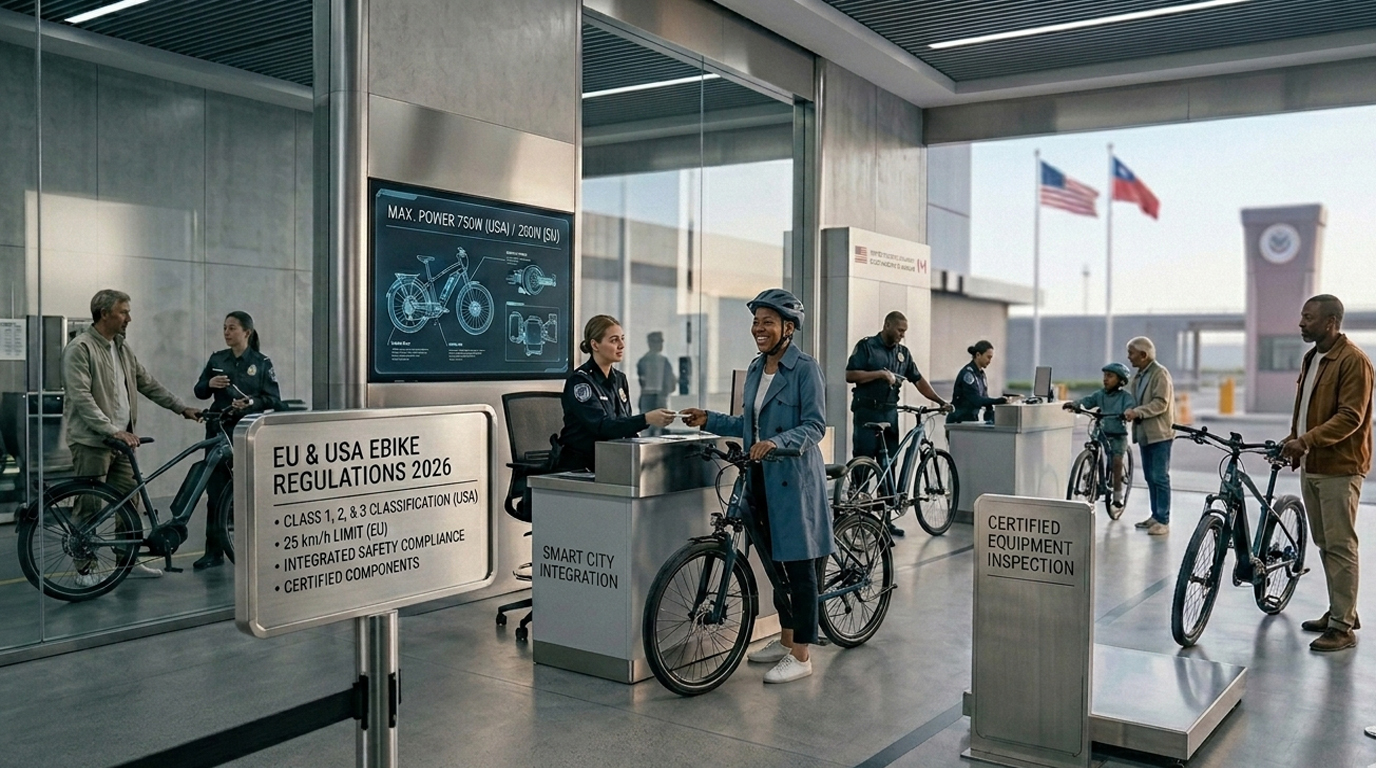
As highlighted in our regulatory briefing (p5.png), the distinction between regional laws remains a cornerstone of ebike ownership.
- The USA 3-Class System: Most states continue to adhere to the three-class system. Class 1 & 2 (20 mph limit) are widely accepted on bike paths, while Class 3 (28 mph, pedal-assist only) is often restricted to road use.
- The European Standard (EU): Compliance in Europe is stricter, generally limiting motors to 250W continuous power and a top assisted speed of 25 km/h. Anything beyond this is categorized as an “L1e-B” electric moped, requiring registration and insurance.
2. Certified Equipment Inspection & Smart Integration
The “Certified Equipment Inspection” station in p5.png illustrates a growing trend: Official Compliance Verification.
- Integrated Safety Compliance: In 2026, many smart cities utilize Smart City Integration to “check-in” ebikes via IoT. This ensures the bike’s software hasn’t been tampered with to exceed legal speed limits (often called “tuning”).
- Certified Components: Authorities now prioritize UL-certified batteries and motor systems to prevent fire hazards and mechanical failures in dense urban areas.
3. Max Power and Torque Regulations
Digital displays at checkpoints now monitor technical specifications such as Max Power (750W in USA) and Max Torque.
- The 750W Ceiling: In the United States, exceeding 750W often pushes a vehicle out of the “bicycle” category and into the “motor vehicle” category, requiring a driver’s license and VIN.
- Adaptive Power Limits: Some regions are experimenting with “Geofencing” technology, where an ebike’s power is automatically capped when the GPS detects it has entered a high-pedestrian “Slow Zone.”
4. Mandatory Safety Gear and Age Restrictions
Compliance isn’t just about the bike; it’s about the rider.
- Universal Helmet Laws: For Class 3 ebikes and all riders under 18, helmets have become mandatory in almost all major jurisdictions in 2026.
- Registration and Identification: While not universal, some “Smart Cities” now require a digital ID or “E-License” for high-speed ebikes to ensure riders understand basic traffic laws.
5. Why Compliance Matters for Your Warranty
Staying within the law is also about protecting your investment.
- Voided Warranties: Modifying your ebike to exceed legal speeds doesn’t just risk a fine; it immediately voids most manufacturer warranties and insurance policies.
- Resale Value: A “Certified Compliant” ebike holds significantly higher resale value in 2026, as buyers want to ensure they can legally use the bike on public infrastructure.