
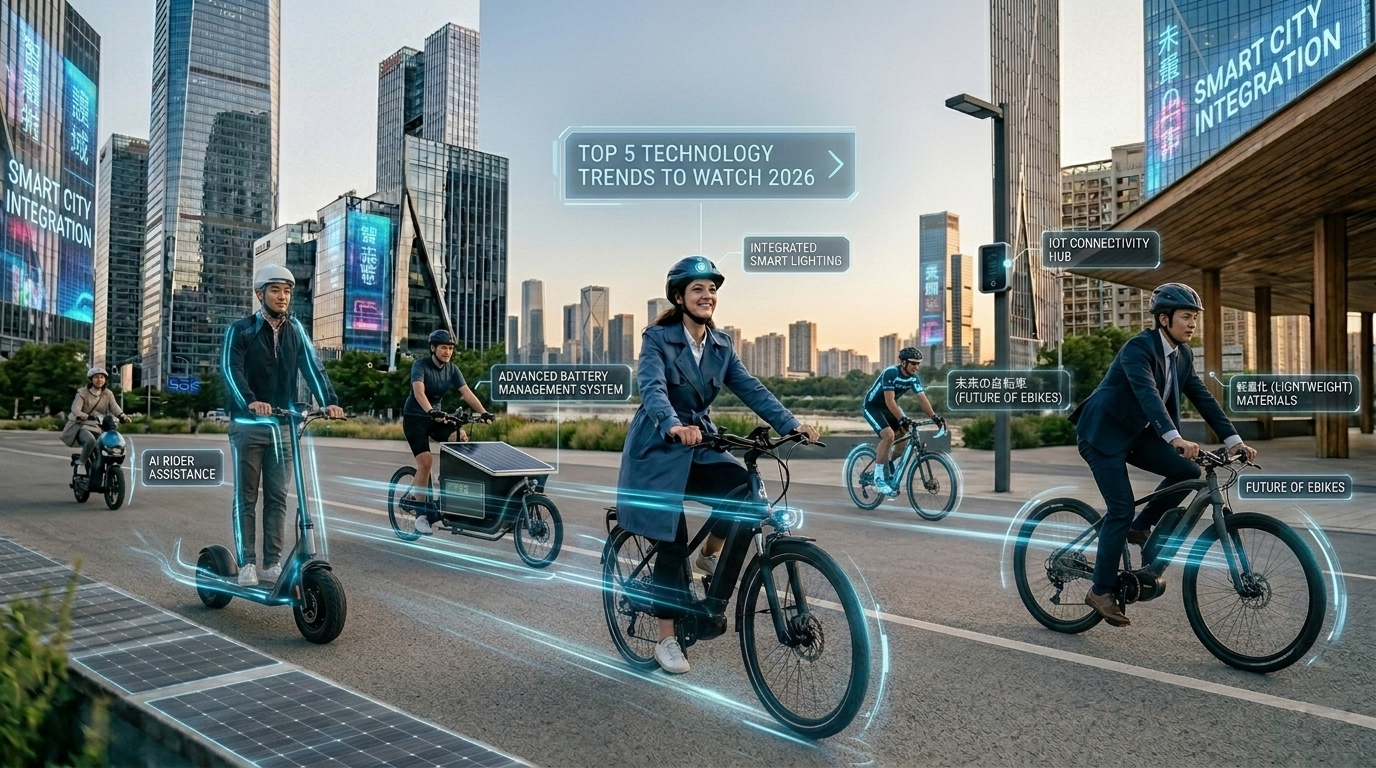
Beyond the Bike Lane: Building Smarter, Greener, and More Connected Metropolises
1. The Proliferation of “Protected” Infrastructure
The massive surge in ebike adoption has pushed cities to move beyond painted lines on the road.
- Speed-Differentiated Lanes: Modern urban planning now incorporates “Super Cycle Highways” with protected lanes designed to safely accommodate ebikes traveling at 20-25 mph alongside traditional cyclists.
- Traffic-Calmed Streets: Entire neighborhoods are being redesigned as “Low-Traffic Neighborhoods” (LTNs), where through-traffic for cars is restricted, making streets safer and more intuitive for ebike riders.
2. Intermodal Hubs and “The Last Mile”
Planning in 2026 focuses on seamless transitions between different modes of transport.
- Ebike-First Transit Hubs: Cities are building massive intermodal hubs where riders can securely park ebikes and immediately board high-speed rail or electric buses.
- The Mobility-as-a-Service (MaaS) Integration: Shared ebike platforms are now fully integrated into city transit apps, allowing users to pay for a train ride and an ebike rental with a single digital token.
3. Smart Infrastructure and IoT Connectivity
As seen in your tech overview, the city itself is becoming “aware” of the riders within it.
- IoT Connectivity Hubs: Smart traffic lights now utilize sensors to detect approaching ebike clusters, extending “green waves” to keep cyclists moving without frequent stops.
- Data-Driven Planning: Urban planners are using anonymized, real-time data from connected ebikes to identify “bottlenecks” and prioritize where new bike paths or charging stations are most needed.
4. Replacing the Second Car: The Cargo Revolution
Urban planning is adapting to the “family hauler” trend we discussed previously.
- Dedicated Cargo Parking: New residential and commercial zoning laws now require wide-berth parking spaces specifically for cargo ebikes, which are increasingly replacing delivery vans for “last-mile” logistics.
- E-Hub Charging Networks: Public charging stations are popping up at grocery stores and cafes, featuring universal plugs that allow riders to top off their batteries while they shop.
5. Solving the “Short Trip” Problem
With many city trips falling between 2 and 6 miles, ebikes are filling the gap that traditional cars and walking couldn’t.
- Reducing Congestion: By incentivizing ebikes for these short distances, cities are successfully reclaiming road space previously clogged by single-occupant cars, reducing overall urban pollution and noise.
- Health and Accessibility: Planning for ebikes ensures that hilly cities or those with extreme weather are still accessible to older riders or those with physical limitations, promoting a more inclusive urban environment.