
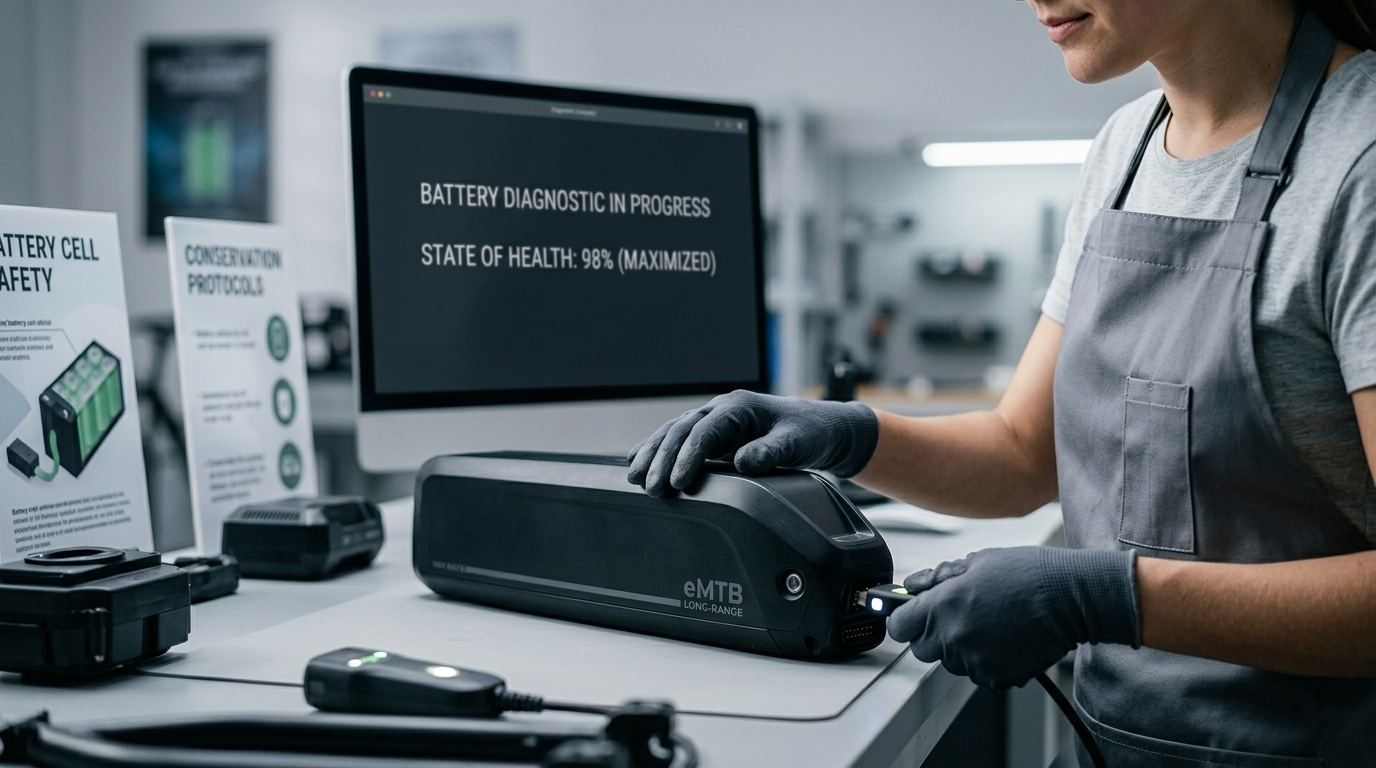
Intro: The battery is often called the “soul” of an ebike. As we move through 2026, breakthroughs in energy density and charging speeds are fundamentally changing how far and how fast we can ride.
1. The 21700 Cell: Mastering the Current Standard
While new technologies grab headlines, the refined Lithium-Ion (Li-ion) battery remains the workhorse of the industry. However, the 2026 iteration is vastly superior to the cells of 2021.
- Silicon Anode Integration: By incorporating silicon into the anodes, manufacturers have boosted energy density by 25%. This allows for a 750Wh battery to fit in a frame tube that previously could only house 500Wh.
- The AI-BMS Advantage: Modern Battery Management Systems (BMS) now utilize machine learning to predict cell degradation. By monitoring your specific riding style—whether you’re a high-torque climber or a steady commuter—the BMS optimizes discharge rates to extend the battery’s lifespan to over 1,500 charge cycles before hitting 80% capacity.
- Thermal Stability: Improved internal venting and phase-change materials mean batteries stay cool even during rapid 15% grade climbs, preventing the “throttling” of power common in older models.
2. The Solid-State Breakthrough: Why It Changes Everything
The “Holy Grail” of energy has finally arrived in premium ebike models this year. Solid-state batteries (SSB) replace the liquid electrolyte with a solid conductive material.
- Safety & Fire Prevention: Liquid electrolytes are flammable; solid ones are not. In 2026, solid-state ebikes are the gold standard for apartment dwellers, as they eliminate the risk of thermal runaway during indoor charging.
- Extreme Weather Performance: Traditional batteries lose up to 30% of their range in freezing temperatures. Solid-state cells are significantly less affected by the cold, maintaining consistent voltage even in sub-zero winter conditions.
- Weight-to-Power Ratio: Solid-state technology offers nearly double the energy density of Li-ion. We are now seeing “Lightweight eMTBs” weighing under 16kg (35lbs) that still offer a full 500Wh of capacity.
3. Rapid Charging and Infrastructure in 2026
Waiting four hours for a charge is becoming a thing of the past. The infrastructure has finally caught up to the hardware.
- Gallium Nitride (GaN) Chargers: These new chargers are half the size of traditional “bricks” and generate almost no heat. They can push a 4C charge rate, taking a battery from 0% to 80% in approximately 20–30 minutes.
- The “Universal Plug” Initiative: Following the trend in the EV car industry, major ebike motor manufacturers (Bosch, Shimano, Specialized) have begun adopting a unified charging port standard in some regions, allowing for high-speed “E-Pump” stations at cafes and trailheads.
- Regenerative Braking 2.0: While previously inefficient for ebikes, new 2026 hub motors have optimized energy recovery, allowing riders to claw back 5–8% of their battery during long, sustained descents.
4. Sustainability: The Second Life of Ebike Batteries
As the first generation of mass-market ebikes hits the decade mark, 2026 is the year of Battery Circularity.
- Recycling Programs: Leading brands now offer a “Core Exchange” where your old battery is recycled to recover 95% of the cobalt, nickel, and lithium.
- Second-Life Storage: Batteries that have dropped below 70% capacity (no longer ideal for riding) are being repurposed into home energy storage units to store solar power.